Market Insight: The Hidden Risk to Dealers of Safety Recalls
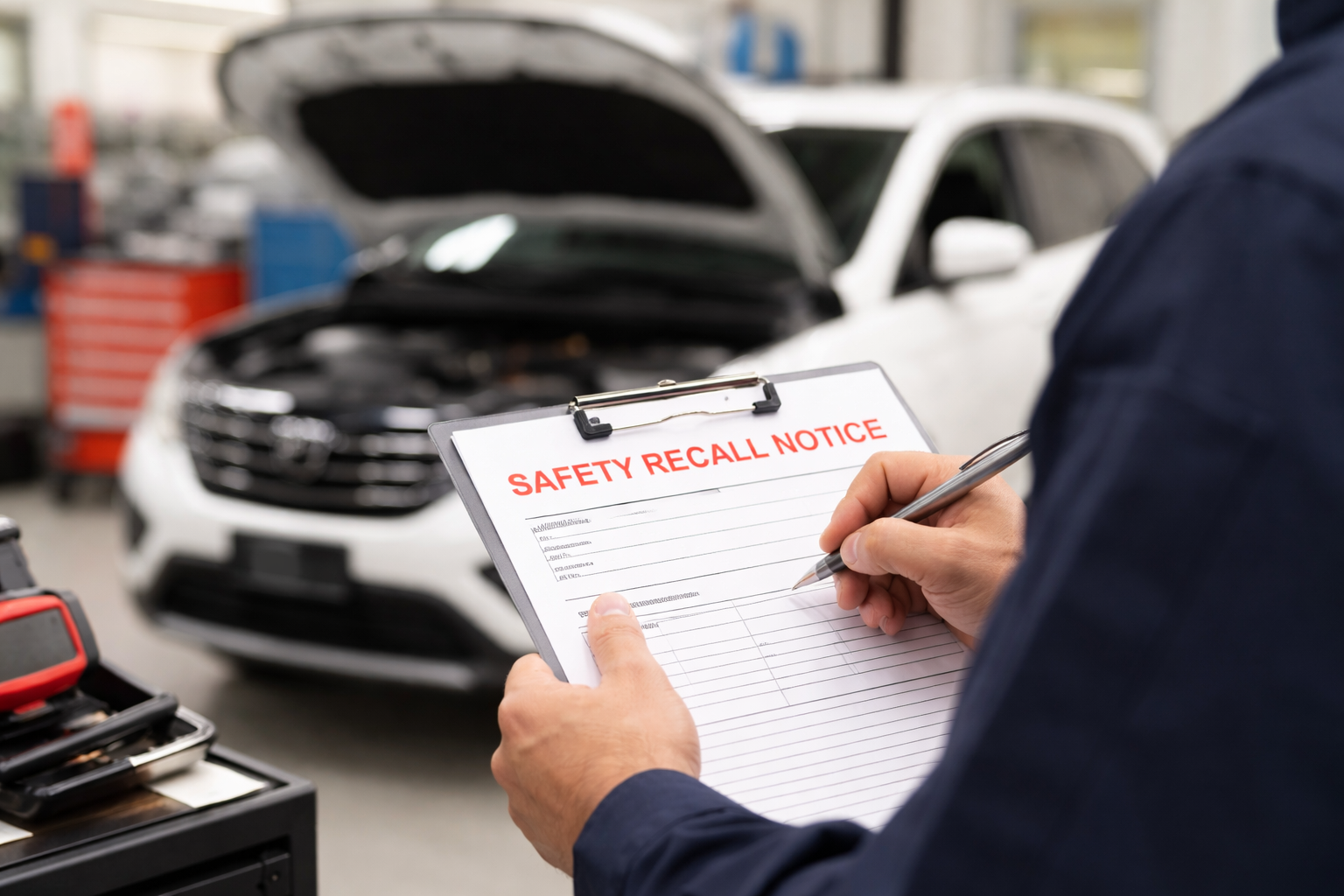
Outstanding safety recalls remain an underestimated risk in the used vehicle supply chain. For dealers, overlooking recall status can have serious financial, legal, and reputational consequences—many of which only emerge after stock has already been purchased or sold.
Buying Stock That Can’t Be Resold
One of the most immediate risks arises at the point of acquisition. If a dealer purchases a vehicle with an outstanding safety recall, that vehicle may not be legally resold until the recall has been completed.
In practice, this often means:
- Delays due to parts availability
- Limited workshop capacity at franchised dealers, who typically prioritise their own customers
- Extended holding periods, tying up valuable working capital
- Ongoing depreciation, eroding margin while the vehicle sits unsold
What initially appears to be a straightforward stock purchase can quickly become a capital-intensive liability, especially when timelines stretch from days into weeks.
The Risk of Inadvertently Selling a Recalled Vehicle
Risk doesn’t end when a vehicle is sold. Inadvertently retailing a vehicle with an outstanding safety recall can expose a dealer to far more serious consequences.
These include:
- Potential legal action, if a safety-related incident occurs
- Reputational damage, undermining customer trust and brand credibility
Just because a recall can’t be easily identified using open data sources, responsibility ultimately rests with the dealer to perform due diligence on the vehicles they are selling.
Why Recall Identification Is More Complex Than It Appears
At first glance, managing recall risk may seem straightforward – simply “check for recalls.” In reality, the industry’s data landscape makes this far more complex to achieve.
Recall information is fragmented across multiple sources, each with differing coverage and accessibility:
- SMMT consolidates recall data for 44 manufacturers
- DVSA provides a similar database covering 39 manufacturers
Due to overlaps between the databases, together they cover 55 manufacturers. While this represents the majority of the UK used vehicle parc, significant gaps remain.
For manufacturers outside the scope of both databases:
- Dealers must manually check with the manufacturer
- This may involve using an official online recall checker, where one exists – or otherwise they will need to contact a franchised dealer
An Operational Challenge at Scale
For dealers profiling large volumes of stock, this fragmented approach can quickly become unmanageable.
The challenge is compounded by:
- Coverage changes and new market entrants (e.g. Chinese brands)
- Time-consuming manual checks, with no audit trail
The result is a recall-checking process that is too often inefficient, prone to error, and struggles to keep pace with the scale and speed of modern used car operations.
A More Joined-Up Approach to Recall Risk
Against this backdrop, reducing recall risk requires more than access to a single data source. It requires a joined-up approach that reflects the realities of fragmented manufacturer coverage.
One Auto API’s Combined Recall Check has been designed with this in mind. By utilising both DVSA and SMMT recall databases, it enables dealers to automatically check recall status across the broadest possible set of manufacturers.
Crucially, where a manufacturer falls outside the scope of both databases, this is clearly identified – allowing dealers to flag those vehicles that require a manual manufacturer or franchised dealer check, rather than assuming a clean result based on incomplete data.
In practice, this means dealers can:
- Automate a substantial proportion of recall checks within their stock profiling and part-exchange workflows
- Remove reliance on manual process for the majority of vehicles
- Ensure exceptions are visible, so vehicles requiring further investigation do not fall through gaps in the process
By combining automation with clear exception handling, dealers are better equipped to manage recall risk consistently, at scale, and with greater confidence—supporting operational efficiency and long-term compliance.
One Auto API’s Combined Recall Check is also available in our VRM 360 app, or as an API for integration in any website or software application.