The 11 Best Vehicle Data Platforms in the USA (2026): Features, Strengths & Weaknesses Compared
Whether you’re building a dealer platform, vehicle marketplace, insurance application, finance solution, fleet management system or AI-powered automotive assistant, choosing the right vehicle data provider is one of the most important technical decisions you’ll make.
The US automotive data market is fragmented. Some providers specialise in VIN decoding, others focus on valuations or vehicle history, while only a handful offer comprehensive automotive data ecosystems.
This guide compares eleven of the leading US vehicle data platforms, outlining what each provides, who it’s best for, and where its strengths and limitations lie.
1. NHTSA (vPIC)
Best for: Free safety-related vehicle information
The National Highway Traffic Safety Administration (NHTSA) operates the free vPIC VIN Decoder API using information submitted directly by vehicle manufacturers.
Data Available
- VIN decode
- Manufacturer data
- Safety-related attributes
- Recall data
Strengths
- Completely free
- Official government source
- Excellent for prototypes
- Manufacturer data
Weaknesses
- Safety-focused rather than commercial
- Limited specification depth
- No valuations
- No vehicle history
- No installed factory options, or build-specific data
- Fair-use limits and no commercial SLA
2. J.D. Power
Best for: Enterprise automotive data
J.D. Power (including ChromeData and NADA assets) is one of North America’s largest automotive data providers.
Data Available
- VIN-level data
- Factory-installed options
- Invoice pricing
- Vehicle valuations
- Incentives
- Residual values
- Dealer data
Strengths
- Trusted throughout the automotive industry
- Enterprise-grade products
Weaknesses
- Premium pricing
- Enterprise procurement process
- Typically aimed at large organisations
3. JATO Dynamics
Best for: Market intelligence and vehicle specifications
JATO is a global automotive intelligence company used extensively by manufacturers and fleet organisations.
Data Available
- Vehicle specifications
- New vehicle and options pricing
- Build configuration rules
- Market intelligence
- Vehicle comparisons
- Competitor analysis
Strengths
- Global coverage
- Deep technical specifications
Weaknesses
- Less consumer-focused
- Premium enterprise pricing
- Complex integration
4. CARFAX
Best for: Consumer vehicle history reports
CARFAX is arguably the best-known vehicle history provider in North America. They do not offer a public, self-service official REST API for independent developers. Instead, official data access requires direct business partnerships, dealer accounts, or enterprise agreements.
Data Available
- Accident history
- Title brands
- Ownership history
- Service history
- Mileage records
- Registration history
- Open recalls
Strengths
- Strong consumer brand
- Extensive repair and service network data
- Trusted by dealers and consumers
Weaknesses
- History coverage depends on participating data sources
- Not an approved NMVTIS data provider
- No public, self-service REST API
5. VINAudit
Best for: Affordable, comprehensive vehicle history checks
VINAudit offers lower-cost vehicle history reports than many competitors.
Data Available
- Title history
- Salvage records
- Theft records
- Accident records
- Liens
- Sales history
- Impound and export data
- Valuation data
Strengths
- Competitive pricing
- Approved NMVTIS data provider
Weaknesses
- Less recognised consumer brand
6. auto.dev
Best for: Developer projects
auto.dev offers a developer-friendly API platform with generous entry-level pricing.
Data Available
- VIN decoding
- Make, model and trim
- Vehicle specifications
- Images (higher plans)
- Build data (premium plans)
Strengths
- Easy integration
- Free Starter tier available (plus overage)
- Modern REST APIs
- Good developer experience
Weaknesses
- Free tier limited to 3 endpoints
- Limited data depth compared enterprise automotive platforms
- $299-599/mo standing charge (plus data costs) for Growth and Scale plans
7. Black Book
Best for: Vehicle valuations
Black Book has been producing automotive valuations for decades.
Data Available
- Trade values
- Retail values
- New vehicle pricing
- Market inventory
- Specification data
Strengths
- Respected valuation methodology
- Widely used by lenders
Weaknesses
- Focused primarily on pricing and valuations
- Not a general-purpose vehicle data platform
8. VehicleDatabases.com
Best for: Simple API access to vehicle information
VehicleDatabases.com provides VIN decoding and other APIs with transparent pricing.
Data Available
- VIN decoding
- Vehicle specifications
- Technical data
- Sales history
- Market values
Strengths
- Straightforward pricing
- Simple integration
- Good for moderate usage
Weaknesses
- Low rate limits
- Limited enterprise scalability
- Limited data catalogue
9. Marketcheck
Best for: Live used car market inventory
Marketcheck aggregates vehicle listings from thousands of dealerships.
Data Available
- Live vehicle listings
- Dealer inventory
- Historical listings
- Market pricing
- Price trends
- Days to sell
- VIN decoding
- OEM incentives
Strengths
- Real-time inventory data
- Retail pricing analytics
- Large dealer network
Weaknesses
- Market inventory focused
- Limited access to other data types
10. Kelley Blue Book (KBB)
Best for: Consumer vehicle valuations
Kelley Blue Book is one of America’s most recognised automotive brands.
Data Available
- Consumer valuations
- Trade-in values
- Dealer retail values
- Vehicle reviews
- Ownership costs
Strengths
- Trusted consumer brand
- Well-known pricing methodology
- Excellent market recognition
Weaknesses
- Primarily a valuation business
- Limited developer APIs
11. One Auto API
Best for: Startups, scaleups and businesses wanting one integration for multiple automotive datasets
Unlike many providers that specialise in a single area, One Auto API combines numerous automotive datasets into a single developer platform. Rather than integrating multiple suppliers separately, customers can access over 150 vehicle data services through one API and one commercial agreement.
Data Available
- VIN decoders
- License plate to VIN
- OEM build sheet data
- Market pricing
- Installed options
- Invoice pricing
- Vehicle history
- Service history
- Wholesale valuations
- Vehicle images
- Recall checks
Strengths
- 150+ endpoints
- 20+ data providers
- Normalised field names
- Startup-friendly pricing options
- Enterprise scalability
- UK, European and US coverage
- AI-ready documentation, SDK
- Developer friendly user-interface
Weaknesses
- Businesses looking for only one specialist dataset (e.g. valuations) may not need the breadth of data on offer
Which Vehicle Data Platform Is Best?
Most software providers quickly discover that a single vehicle data API isn’t enough.
As products evolve, they need VIN decoding, vehicle specifications, OEM build data, valuations, vehicle history, images, recalls, maintenance records and market intelligence. Integrating multiple suppliers means multiple contracts, different APIs, inconsistent response formats, field mapping and ongoing engineering overhead.
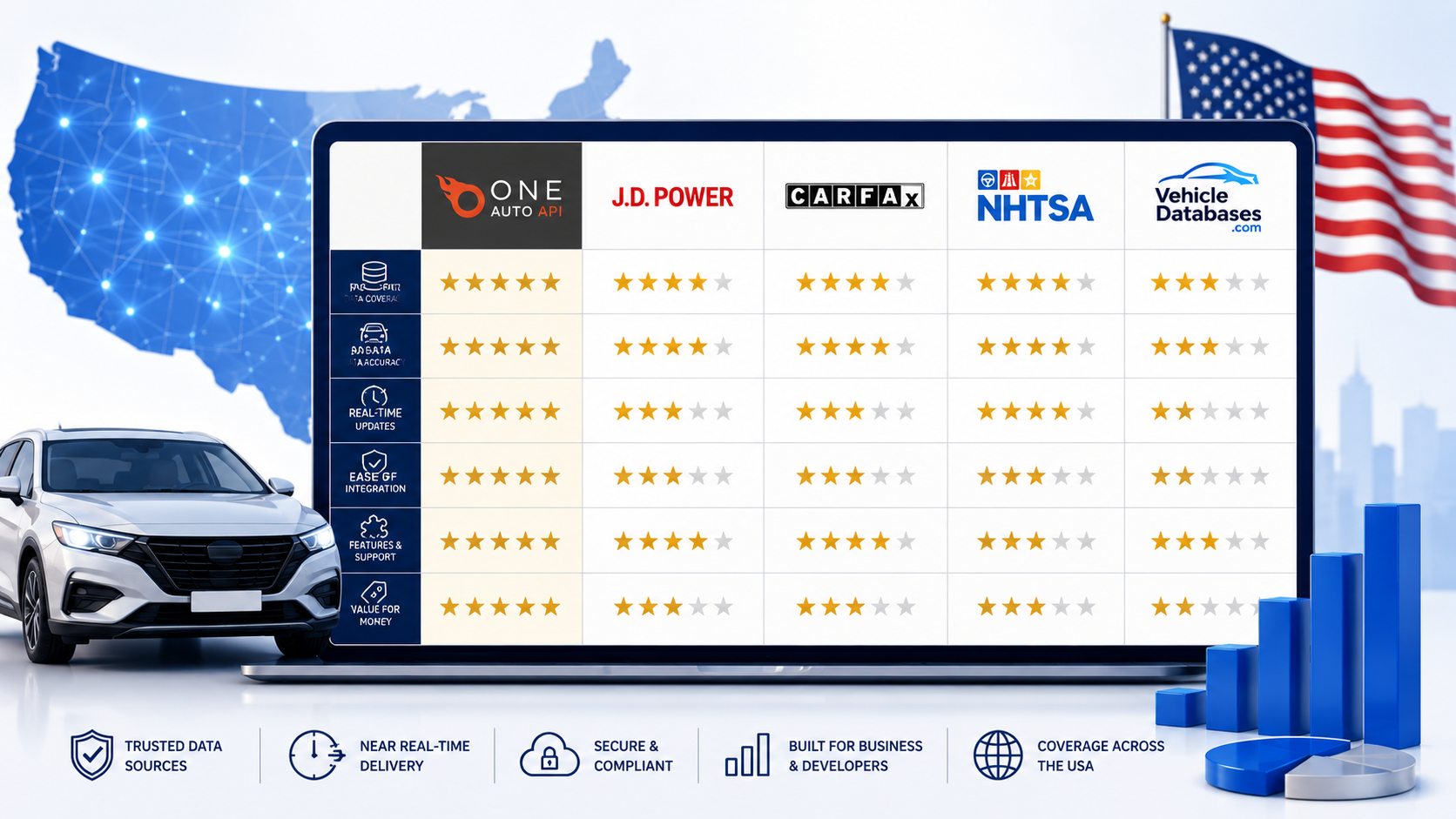
One Auto API eliminates complexity by bringing together leading automotive data providers into a single platform with a unified data dictionary. Through one integration, developers can access VIN decoding, specifications, build data, valuations, vehicle history, images, recalls, maintenance and market intelligence – making it faster to launch new products and features, while also ensuring future data requirements remain simple, compatible and effortless to integrate.